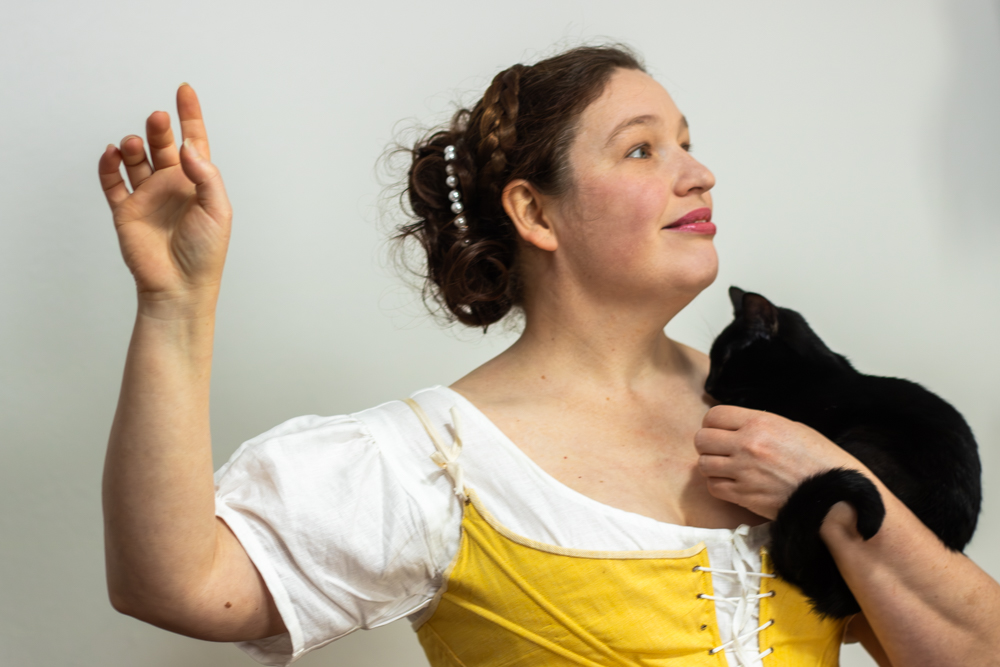
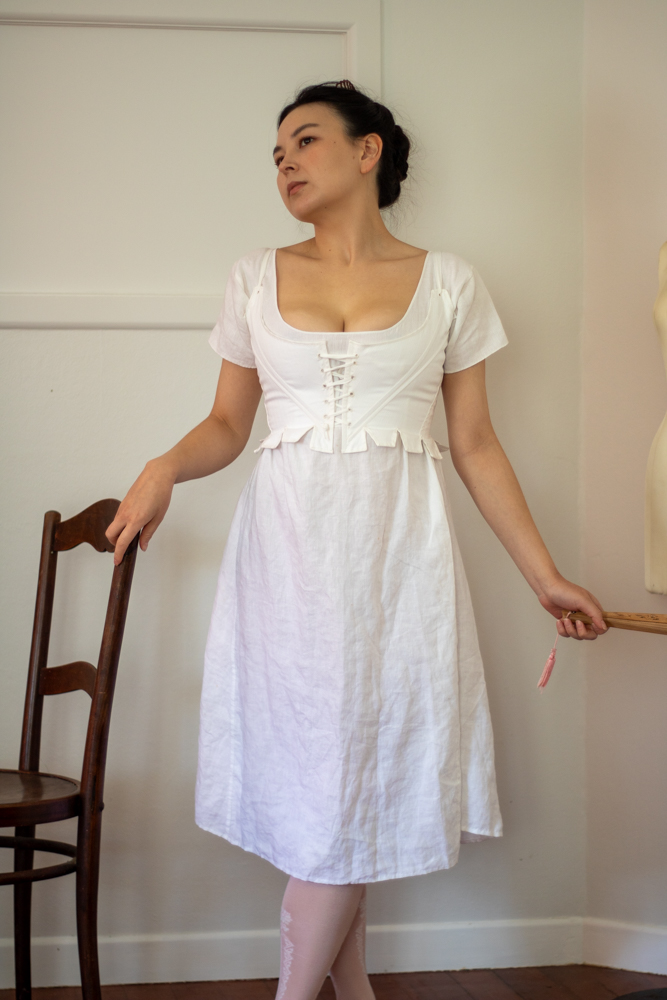
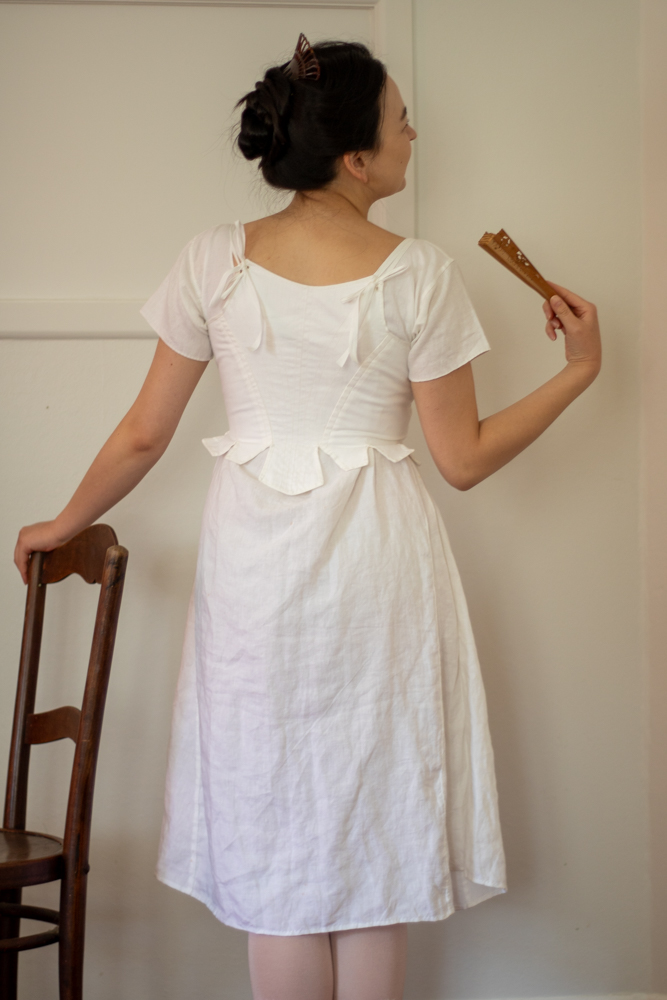
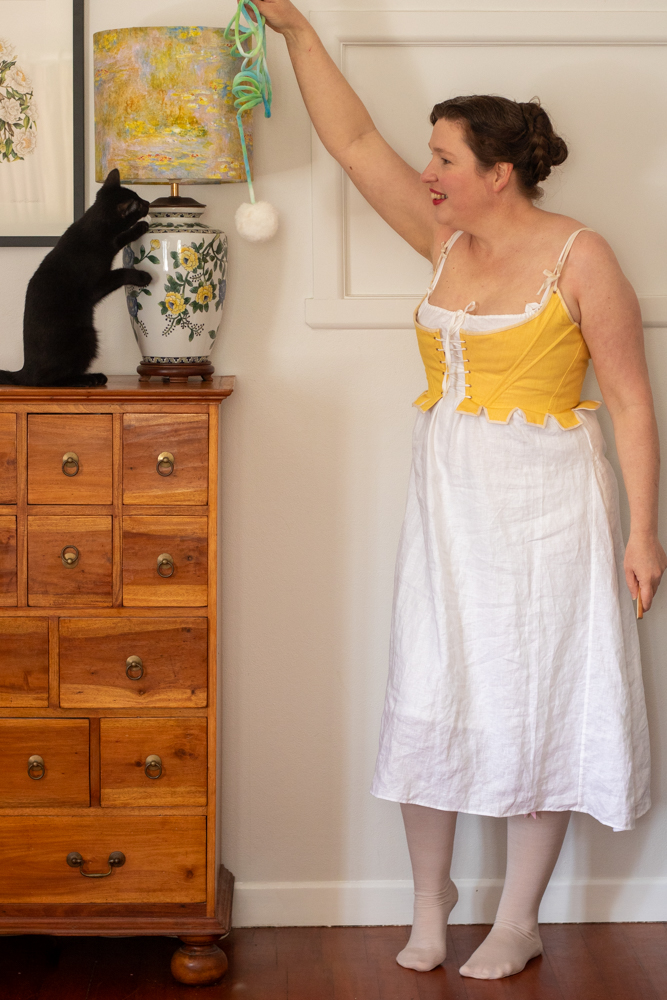
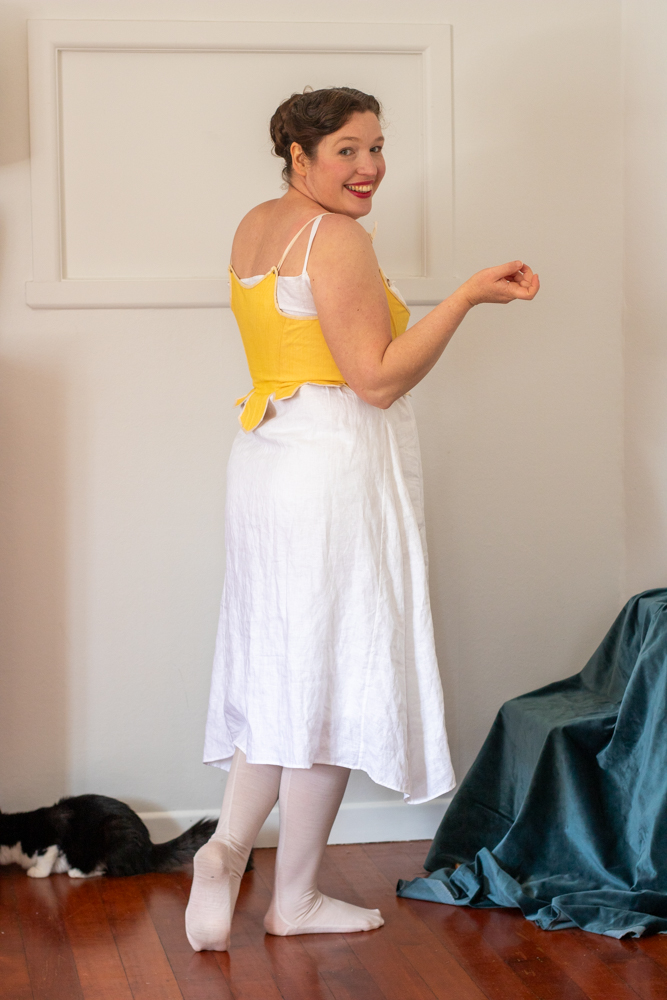
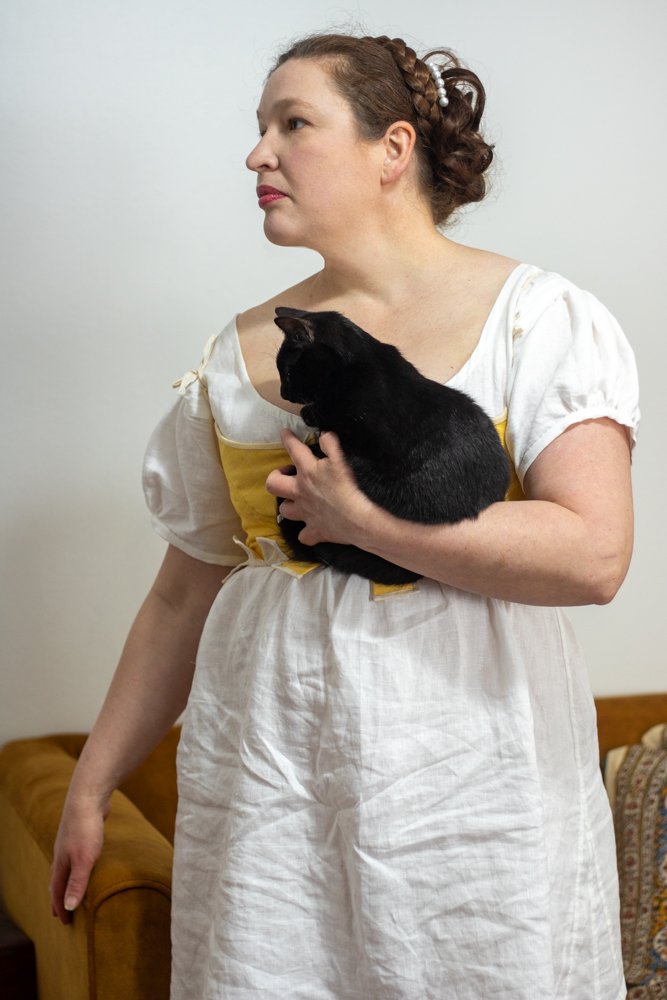
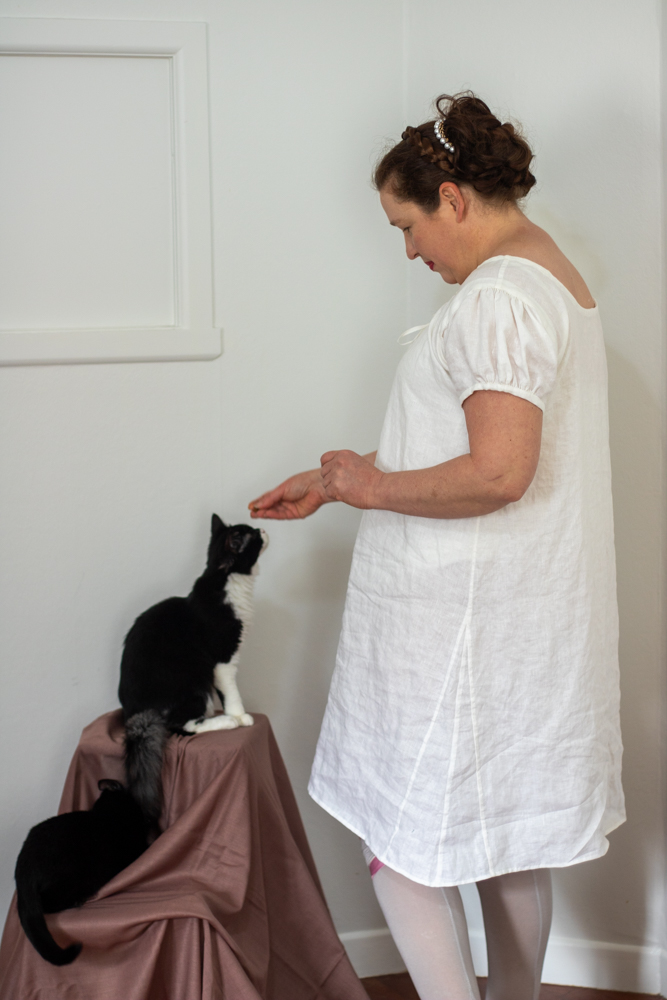
Let’s take a look at the historical inspiration behind the Lise Chemise pattern.
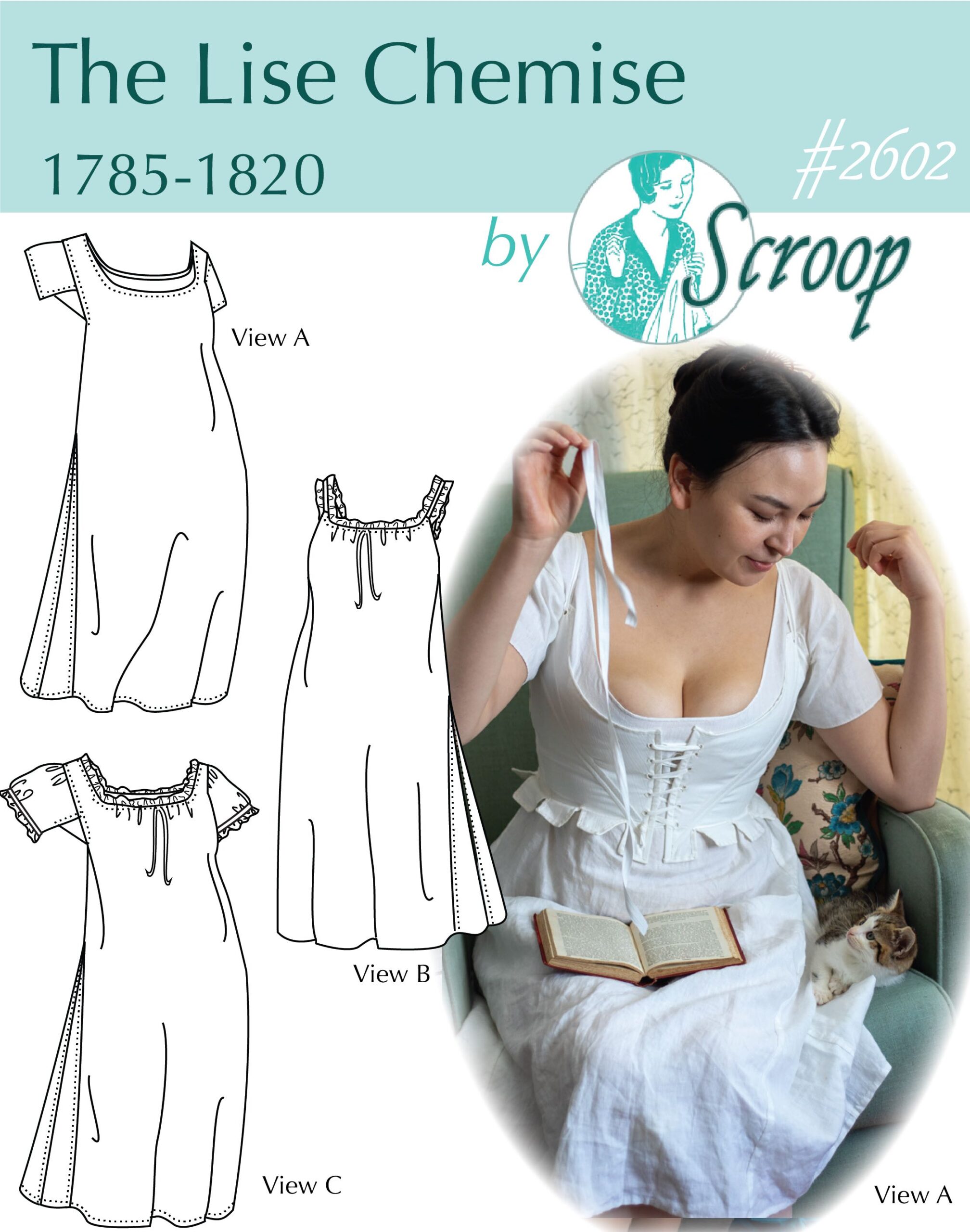
I start a lot of my historical pattern research by looking at as many extant examples of the type of garment that I’m patterning as possible, and identifying common elements, and styles that would work well for the modern costumer.
That’s sort of how the Lise Chemise started, except that the research started more than 14 years ago!
View A: the straight-sleeved chemise
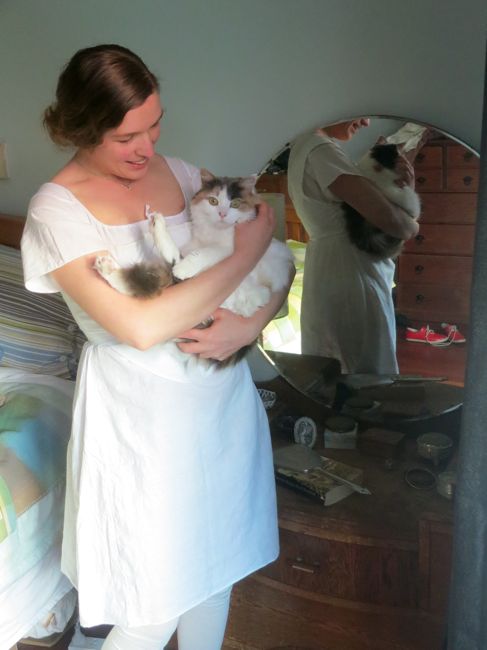
The pattern started View A, with has been my go-to personal shift pattern for years:
It’s directly based on this shift in the Museum of Fine Arts, Boston:
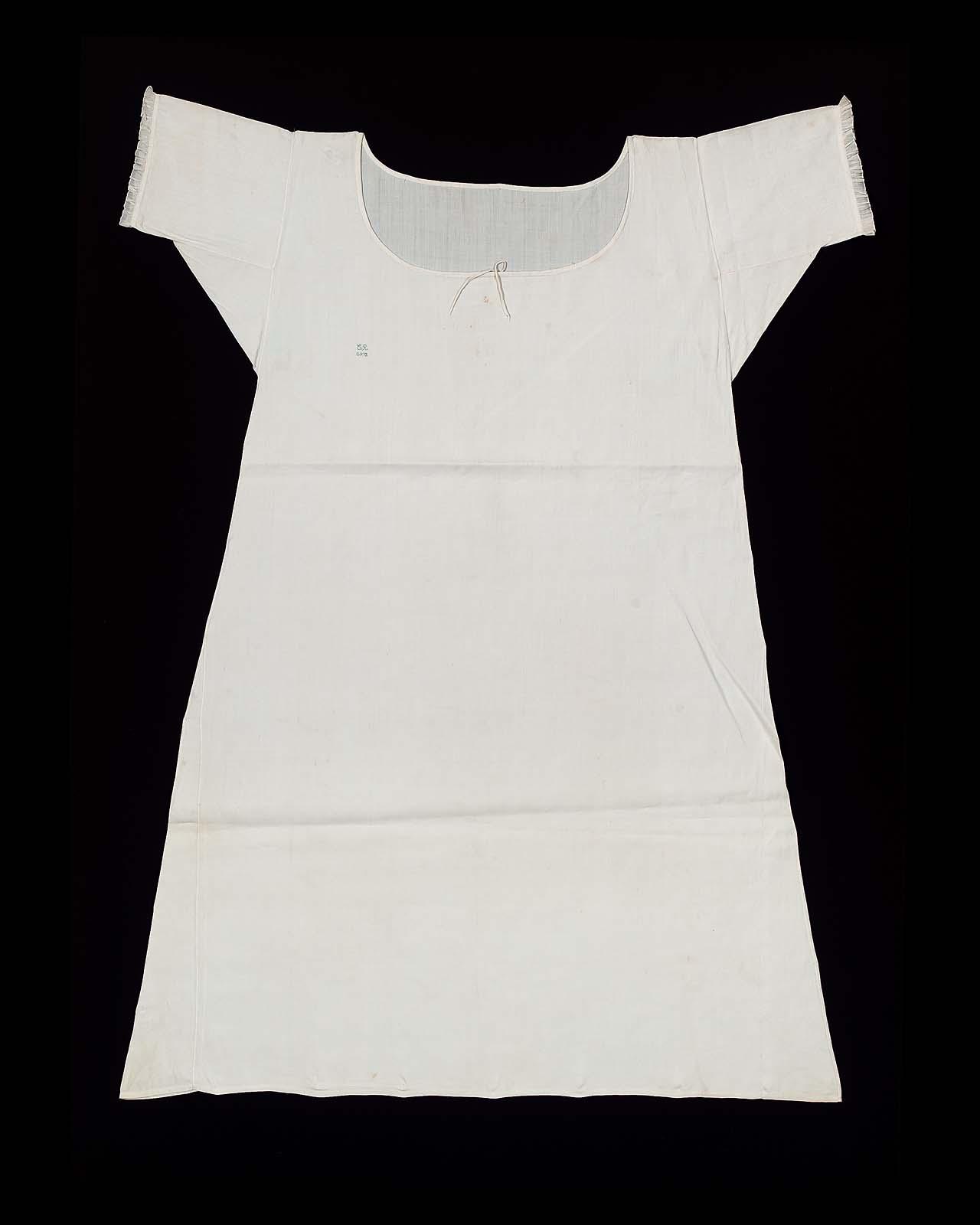
I’ve cut out this shift in so many different sizes for different friends over the years, and it’s such a lovely, versatile style.
(confession: while it is, strictly speaking, a late 18th-early-19th c style, I know versions of it have been worn under everything from 13th century to 1920s costumes..)
Similar styles are shown in fashion plates like this:
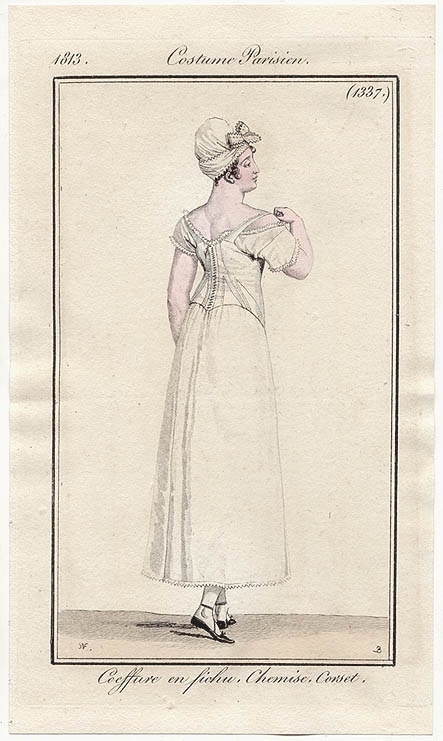
Journal des Dames et des Modes, Costume Parisien, 1813
The famous Ladies Dress-Maker illustration that helped inspire the Minette Stays:
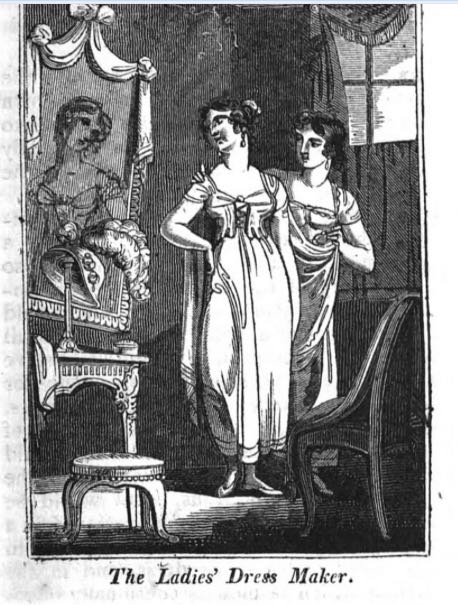
The Book of Trades, Or Library of the Useful Arts, ‘The Ladies Dressmaker’, published by J. Souter, 1818
And there are lots of other extant shifts with similar features. They all have simple straight, cuffed sleeves in lengths ranging for very short to just-above the elbow. Some have drawstring necks, some don’t. Some feature ruffle trim, some don’t. The neck shapes range from shallow scoops to deep squares.
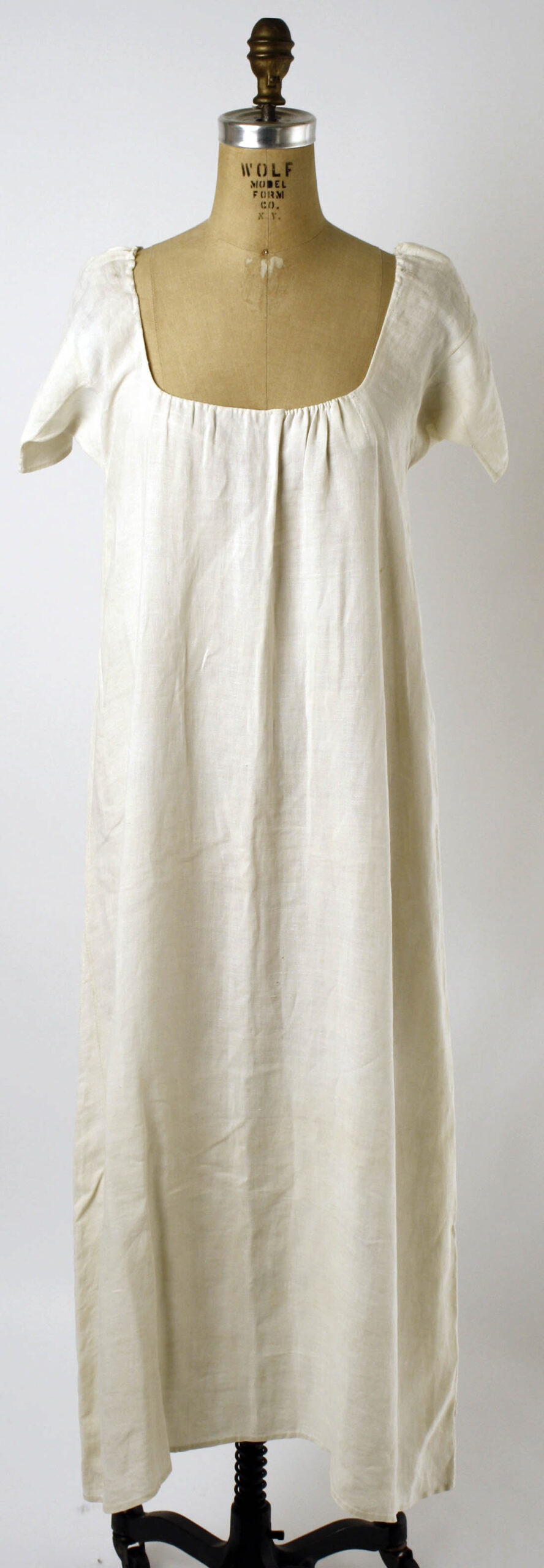
Chemise, third quarter 18th century, French, linen, Metropolitan Museum of Art, C.I.41.161.7
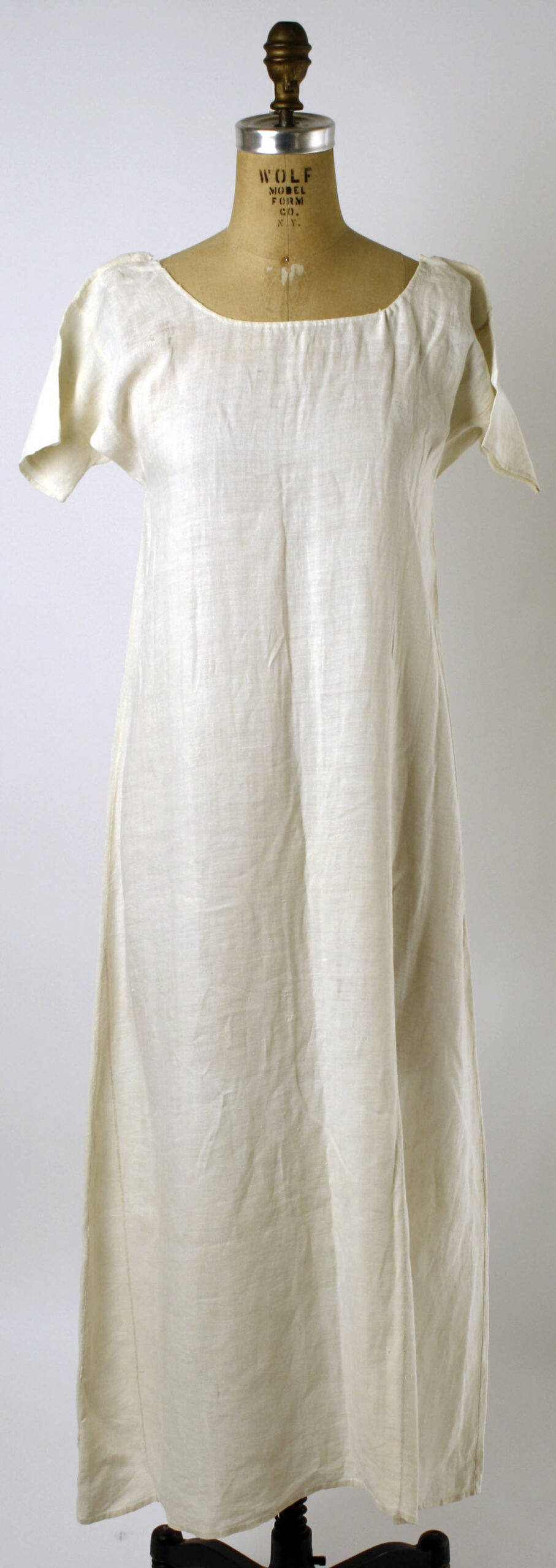
Chemise, 1780–1800, American, Metropolitan Museum of Art, 2005.368
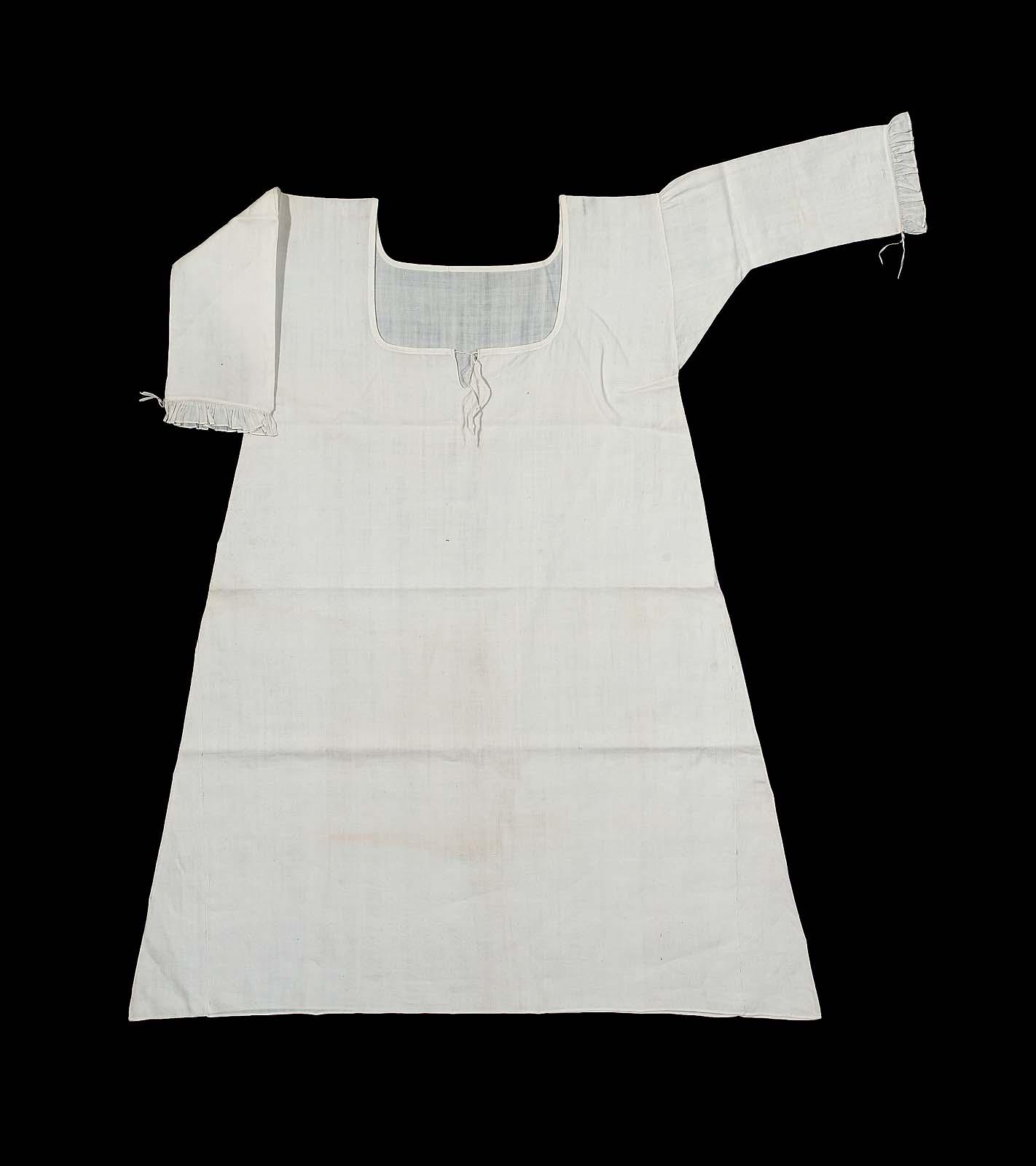
Woman’s shift, late 18th-early 19th c, 99.664.26 MFA Boston
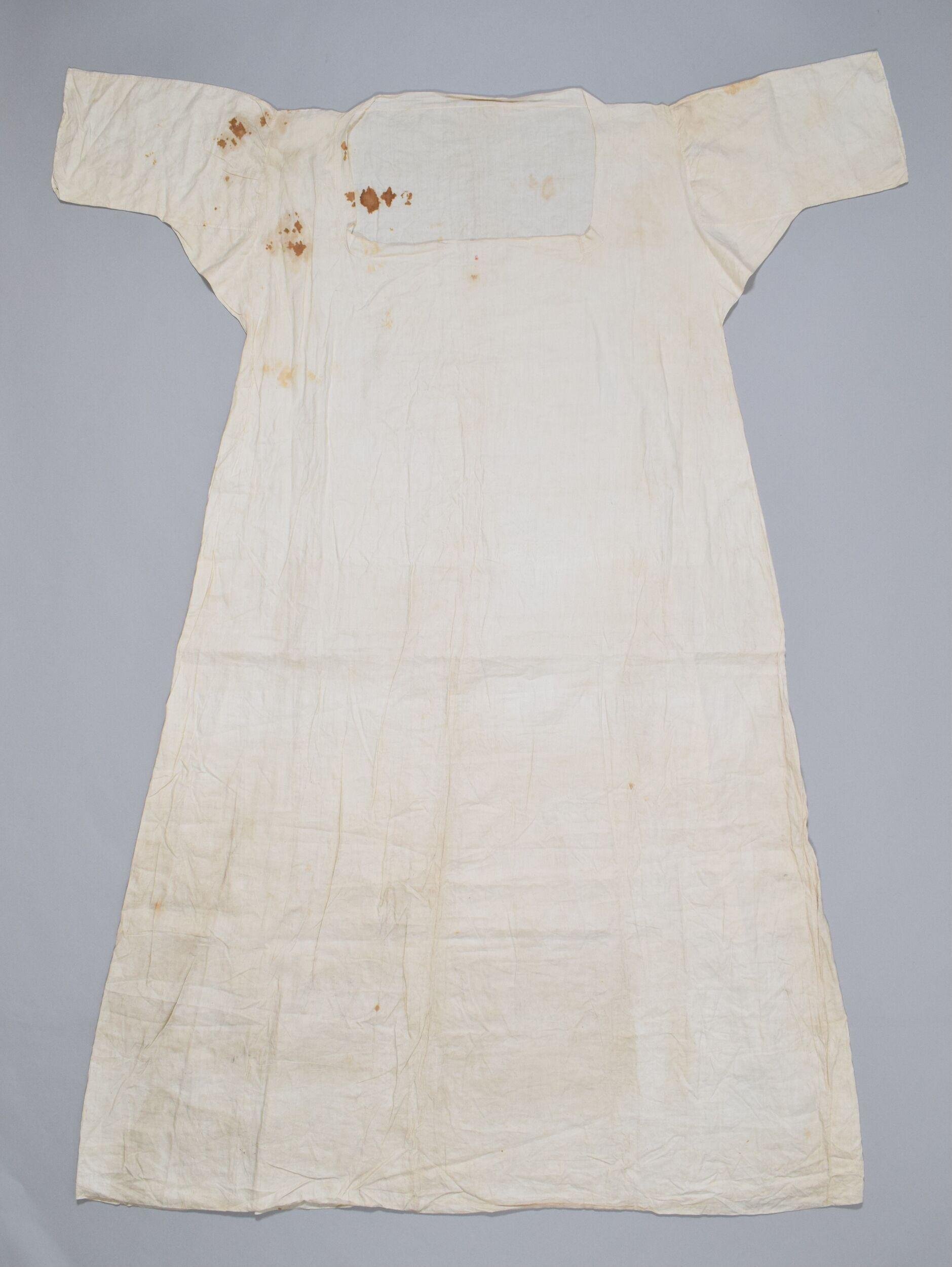
Shift, British, 1800-1820, linen T.467:1-1997 Victoria and Albert Museum
View B: the sleeveless chemise
Unlike View A & C, which are directly based on extant originals, the View B Lise Chemise is a theoretical pattern that aims to create a plausible recreation of a sleeveless shift based on period images and known period construction techniques.
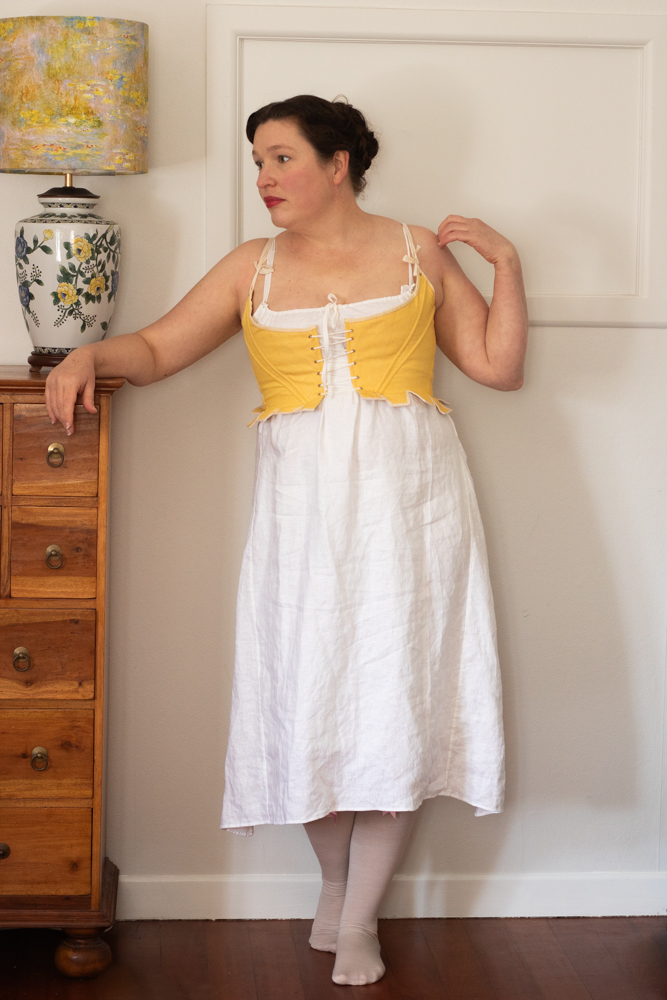
Scroop Patterns Lise Chemise View B
If not a sleeveless shift, what did you wear under dresses like this?
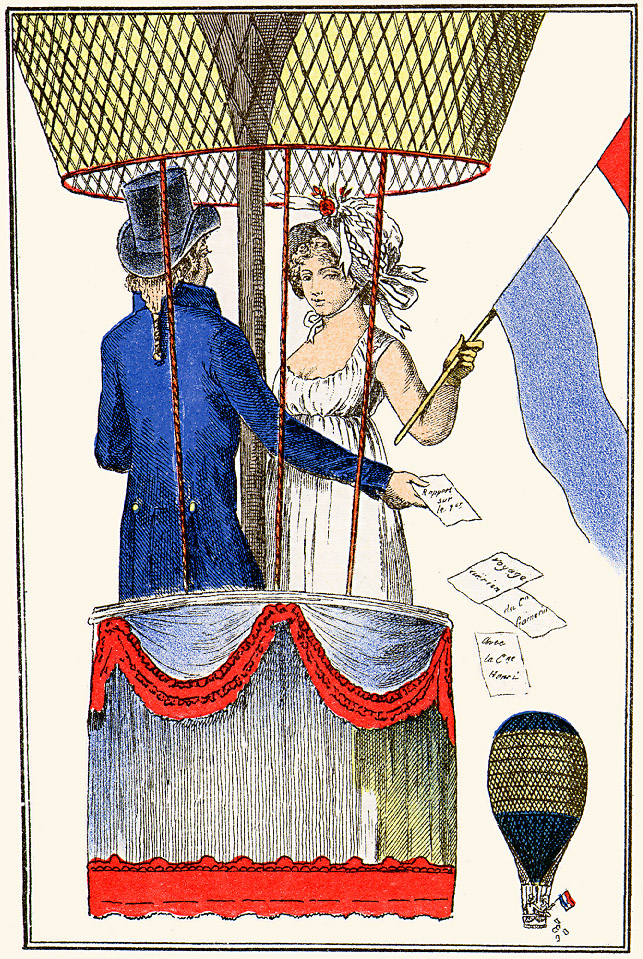
An illustration of ballooning, from the Journal des Dames et des Modes, 1797-1798
Or this?
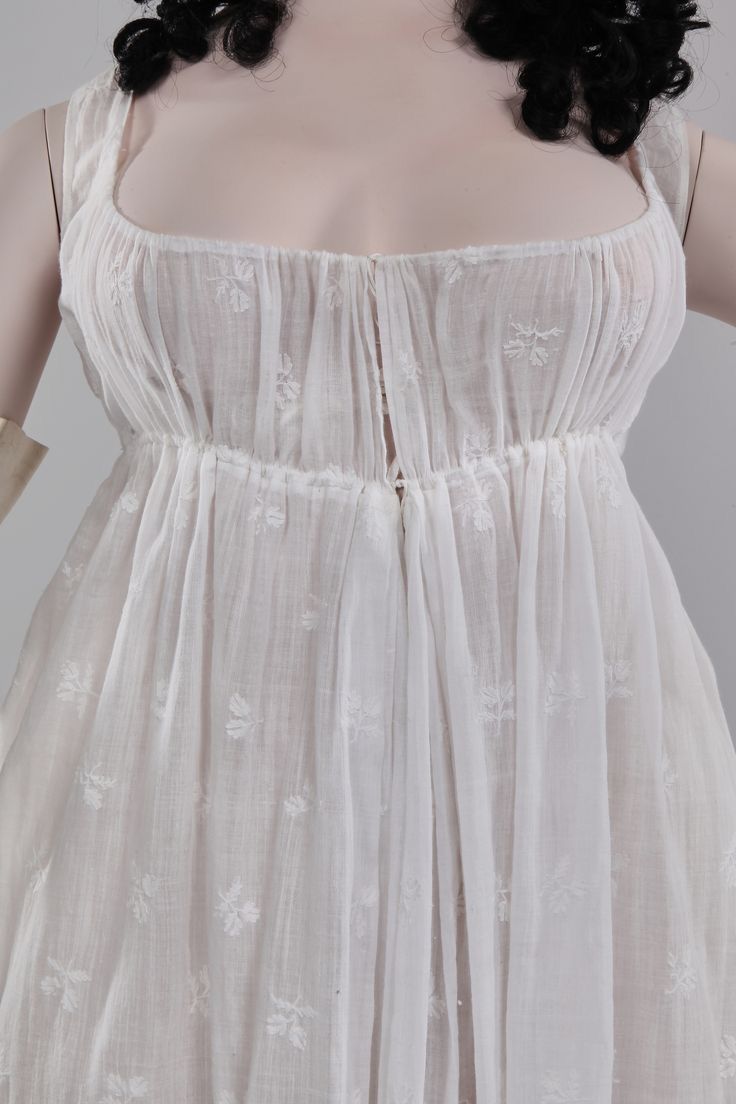
Merveilleuse’ gown of embroidered linen, French, 1796-1800. Sold at auction Feb, 2025
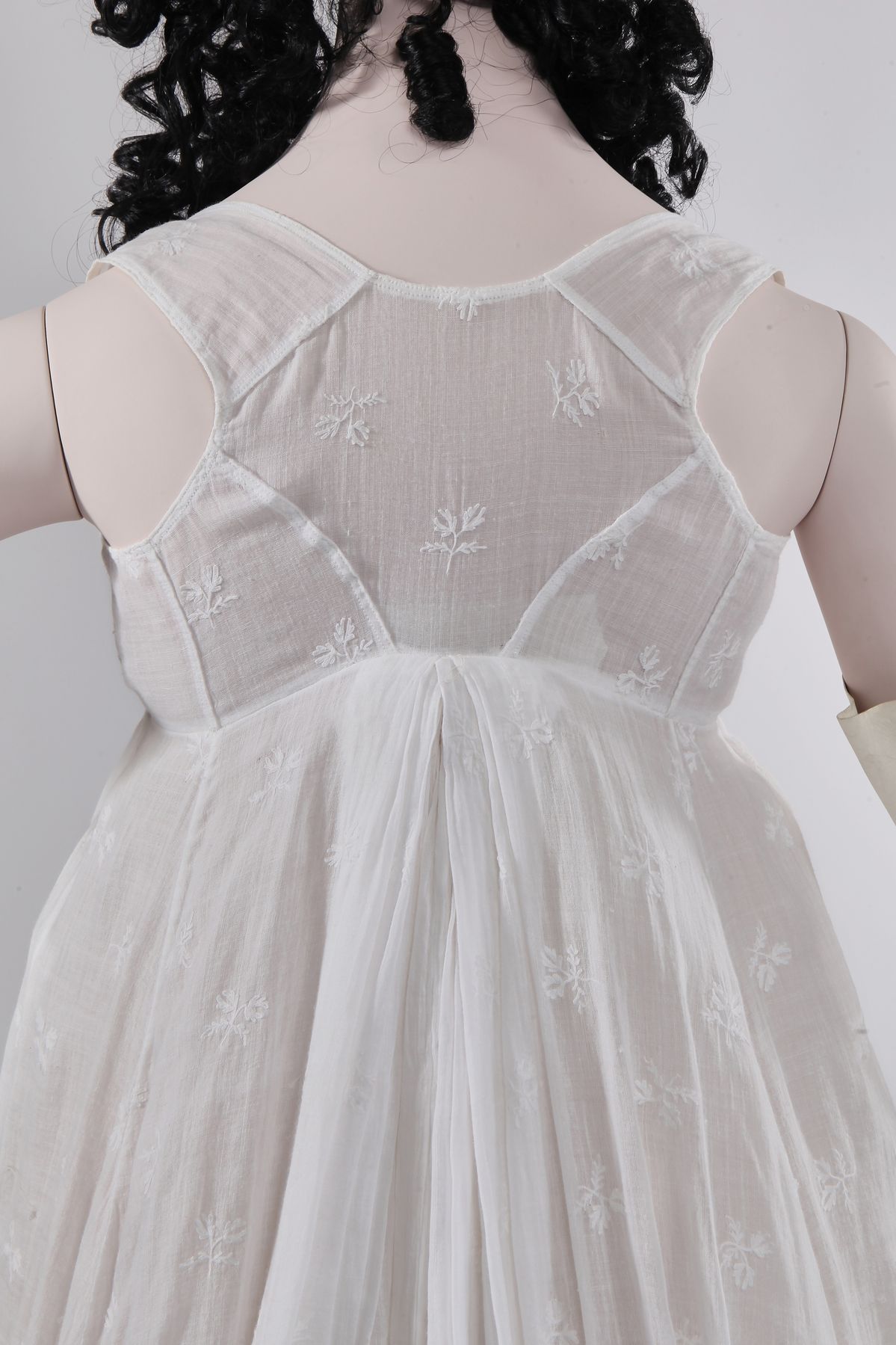
‘Merveilleuse’ gown of embroidered linen, French, 1796-1800. Sold at auction Feb, 2025
(admittedly the very daring probably left of chemise and went for the flesh coloured tights of knit silk mentioned in period sources, but if you weren’t quite that daring?)
And even after the radical ‘Merveilleuse’ era ended, there are portraits showing dresses with sleeves of sheer silk, or sleeves like this:
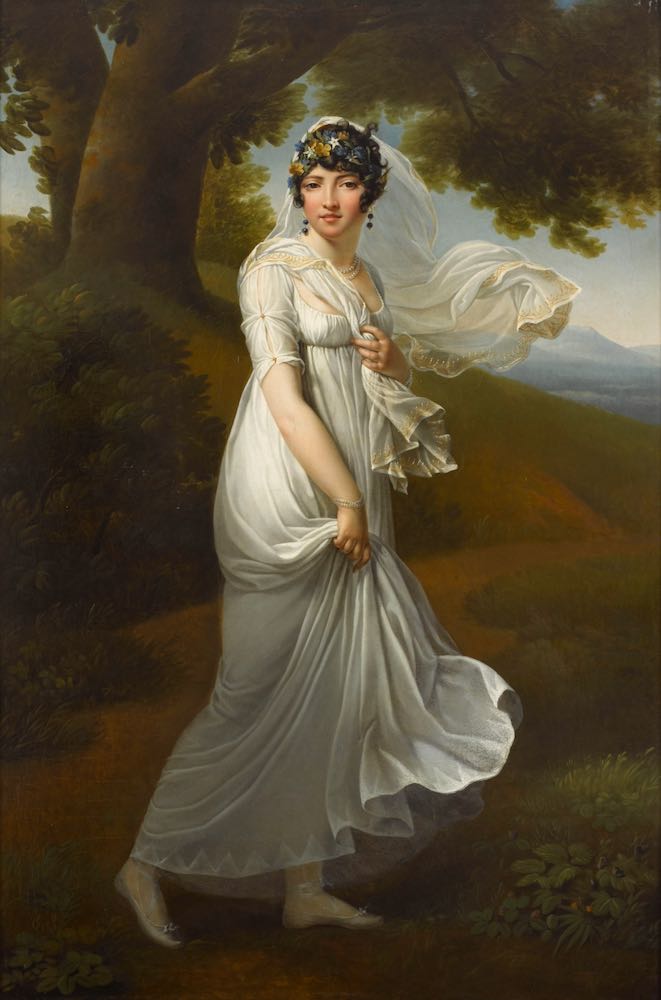
Young woman in a wooded setting, identified as Caroline Murat, Queen of Naples, ca 1810
They would require a narrow-strapped chemise, and she’s definitely wearing something that ends at her calves under her skirt!
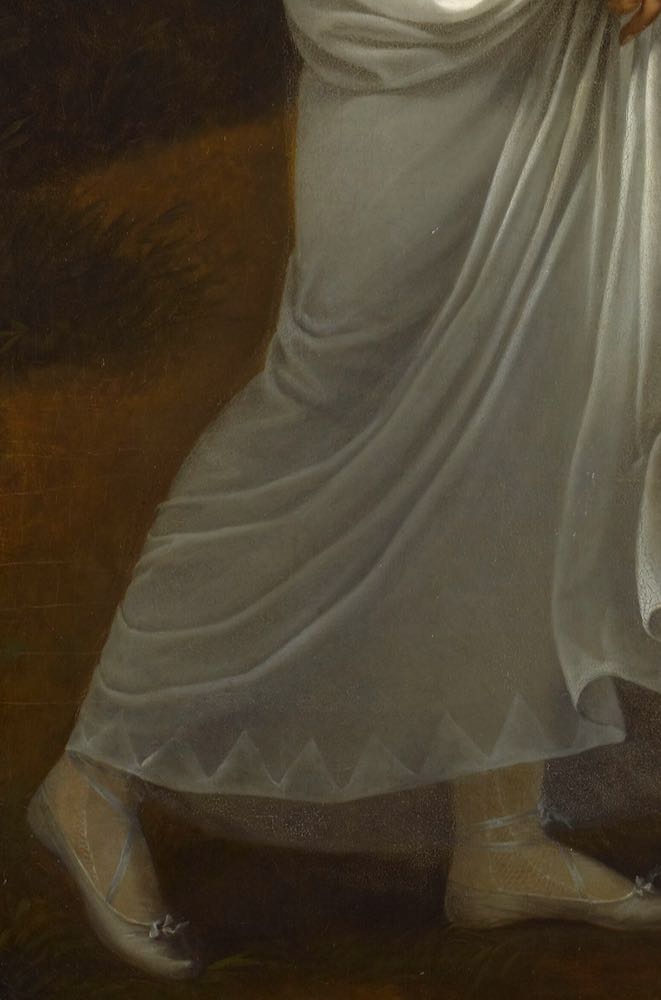
Young woman in a wooded setting, identified as Caroline Murat, Queen of Naples, ca 1810
Period writings say women in sleeveless dresses sometimes left off chemises altogether, but these images heavily suggest that sleeveless chemises were worn:
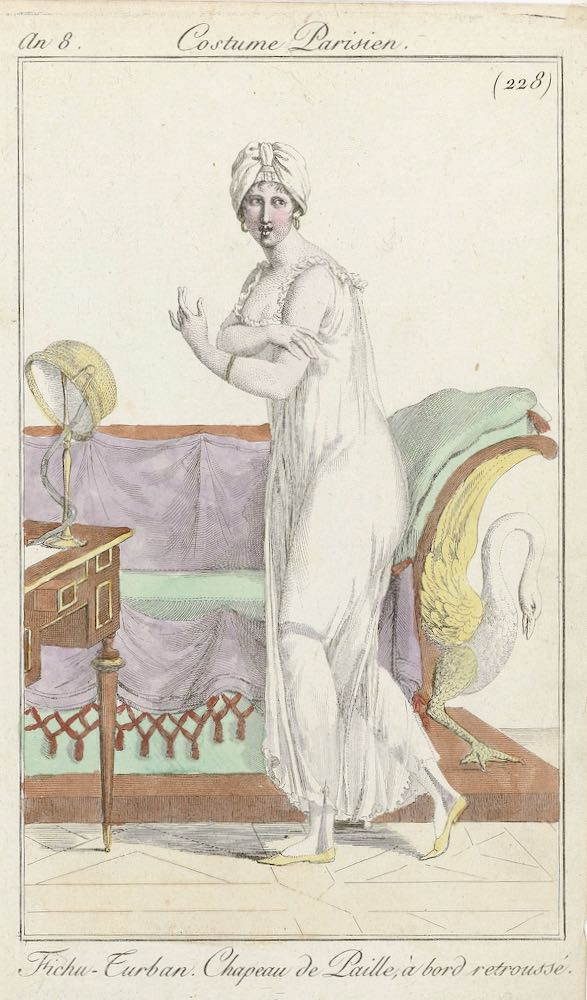
Journal des Dames et des Modes, Costume Parisien, 1800
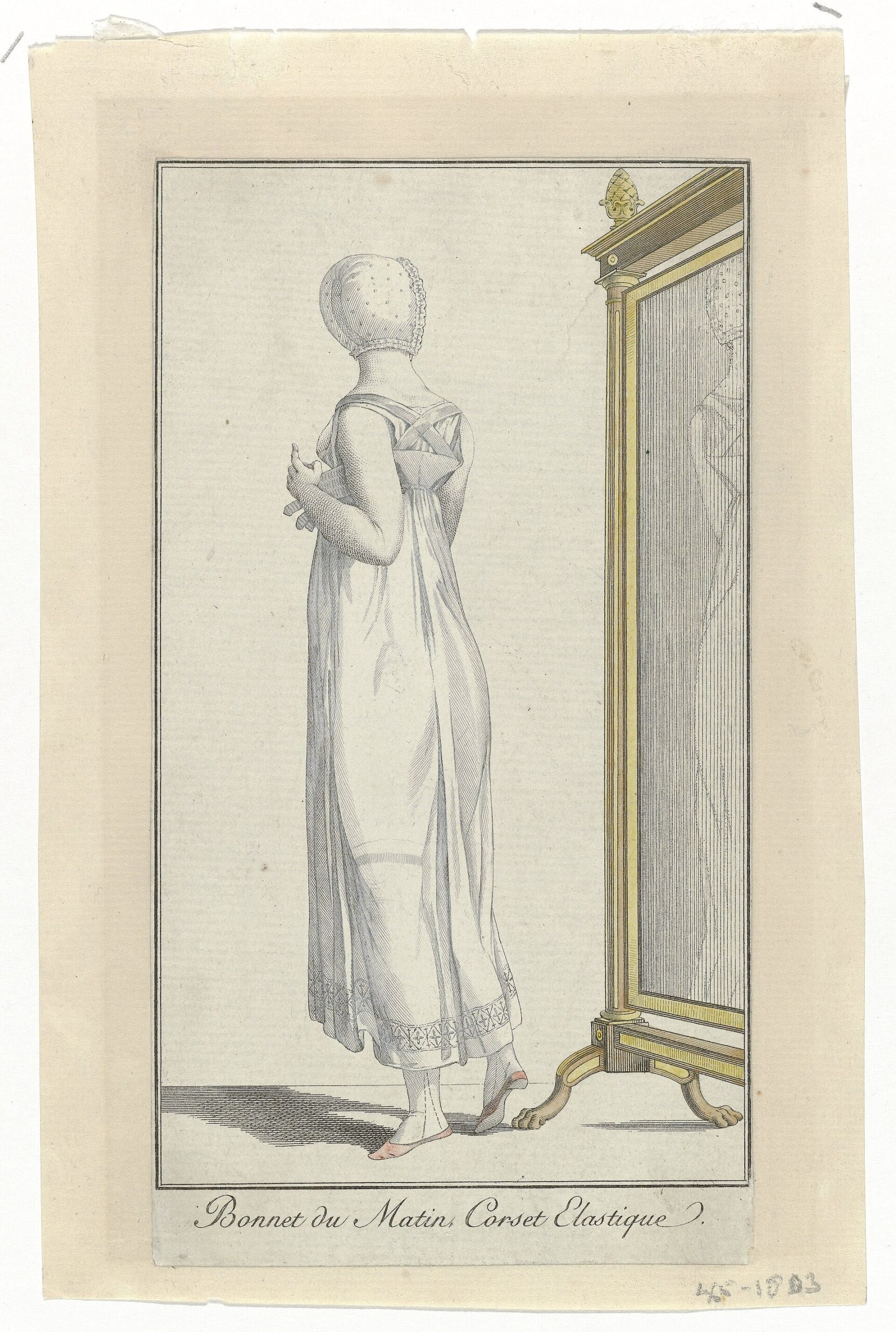
Dames et des Modes, Costume Parisien, 1803
There has been discussion if the ‘Corset Elastique’ image above shows a shift and corset that would be covered by a dress, or if it shows a dress and a corset is a fashion item that would be left exposed. I’m of the opinion it’s a shift and undergarment-corset because of presence of a large mirror, which almost exclusively appear in images of women dressing, and the woman’s cap, which appears to be the type worn before the hair was styled for the day.
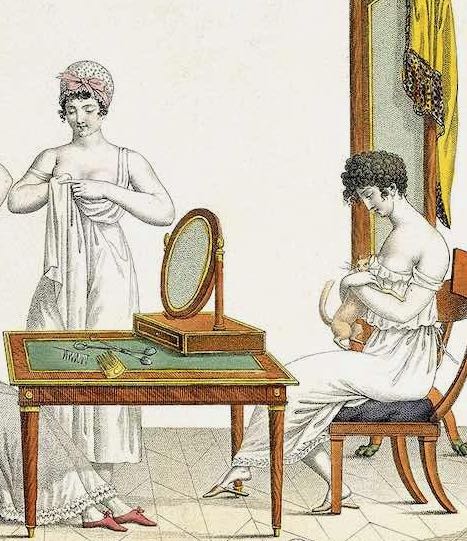
Le Bon Genre n°29 ‘Le Lever des Grisettes Mœurs et courumes de l’Ancien Paris ‘(The Rising of the Grisettes: Manners and customs of old Paris), 1807 (detail)
Some sleeveless shifts, I suspect, were simply older 18th c style shifts with their sleeves cut away to create narrow straps. That might be what we see in the image of Grisette’s preparing for their day. But what about specially made sleeveless shifts? Some women must have had them made!
The Lise Chemise View B attempts to offer a reasonably plausible answer for how a specially-made sleeveless shift would be cut and constructed.
In designing it I worked to three principles:
- The pattern and construction should use known period techniques
- The result should look like a reasonable interpretation of Costume Parisien 228
- The pattern should have as little fabric wastage as possible, just like standard shifts of the period.
I’m happy that the pattern I produced fits those criteria. Someday I hope research will uncover more details of what was worn under sheer sleeves and sleeveless dresses in period (I have a few more historically plausible ideas myself!). Maybe some extant examples that aren’t too altered and modified will turn up!
View C: the puffed sleeve chemise:
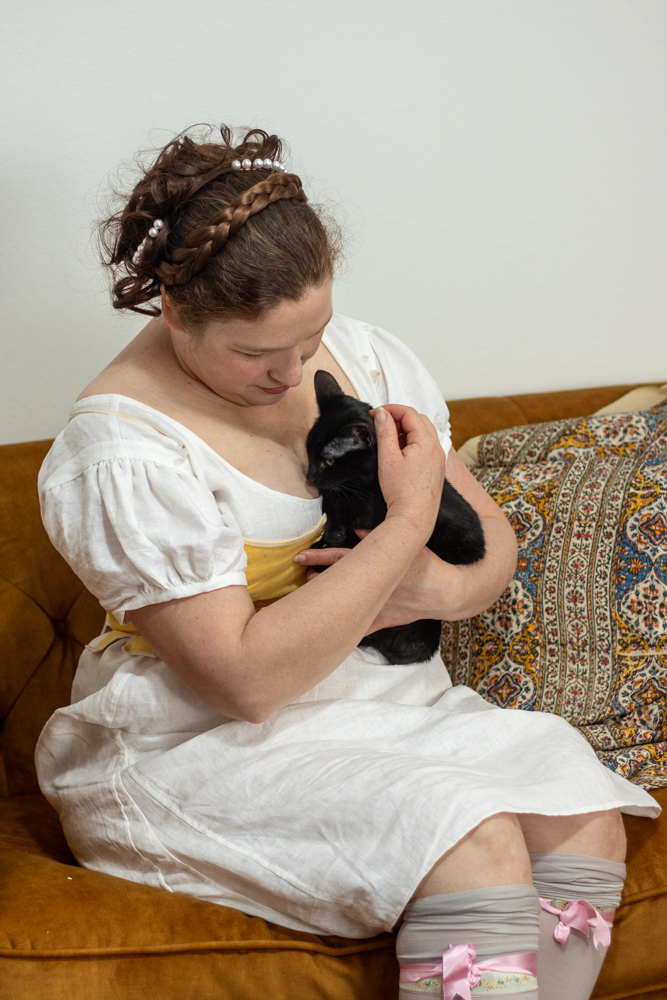
After all the research for View B, View C was easy. Like View A, there’s an exact extant chemise in the Museum of Fine Arts Boston that it’s based on:
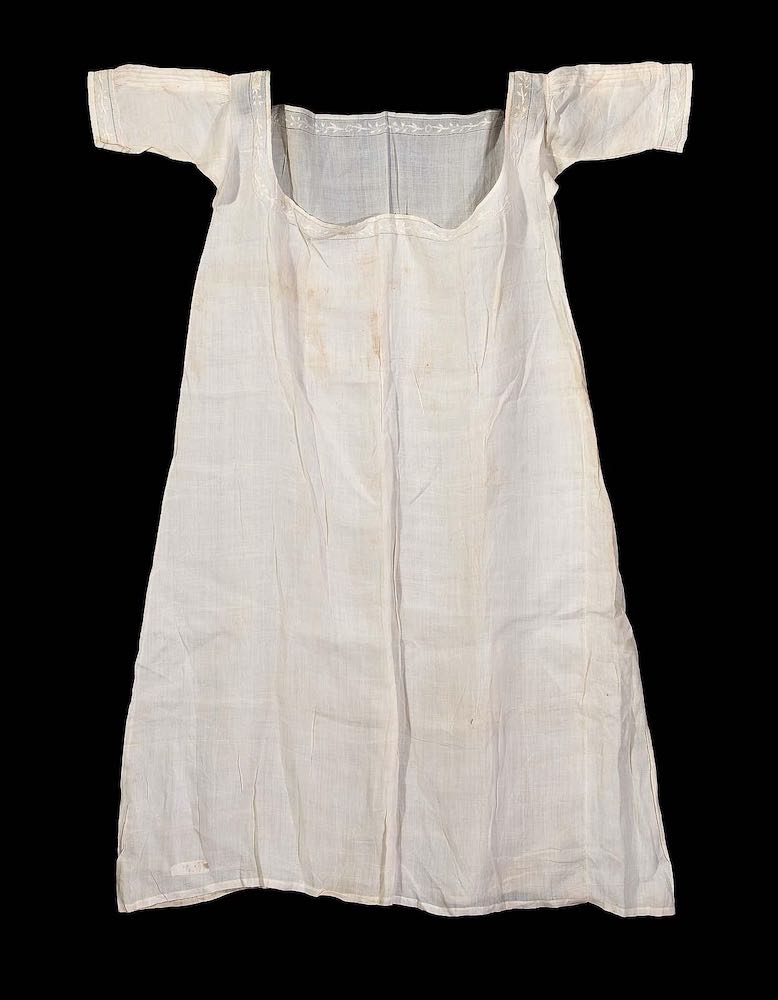
In fact, there’s two. Mehetable owned two identical shifts of this cut, and another very similar one, without the gathering on the sleeves. While Mehetable’s shifts are dated to about 1821, similar puffed-sleeve shifts show up in earlier images:
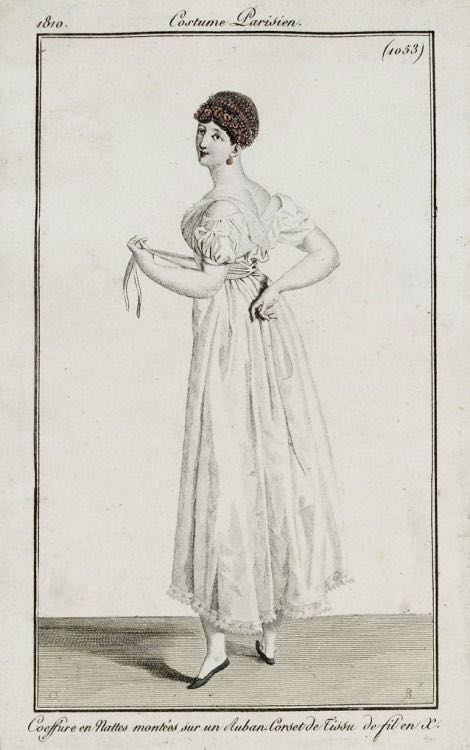
Journal des Dames et des Modes, Costume Parisien, 1810
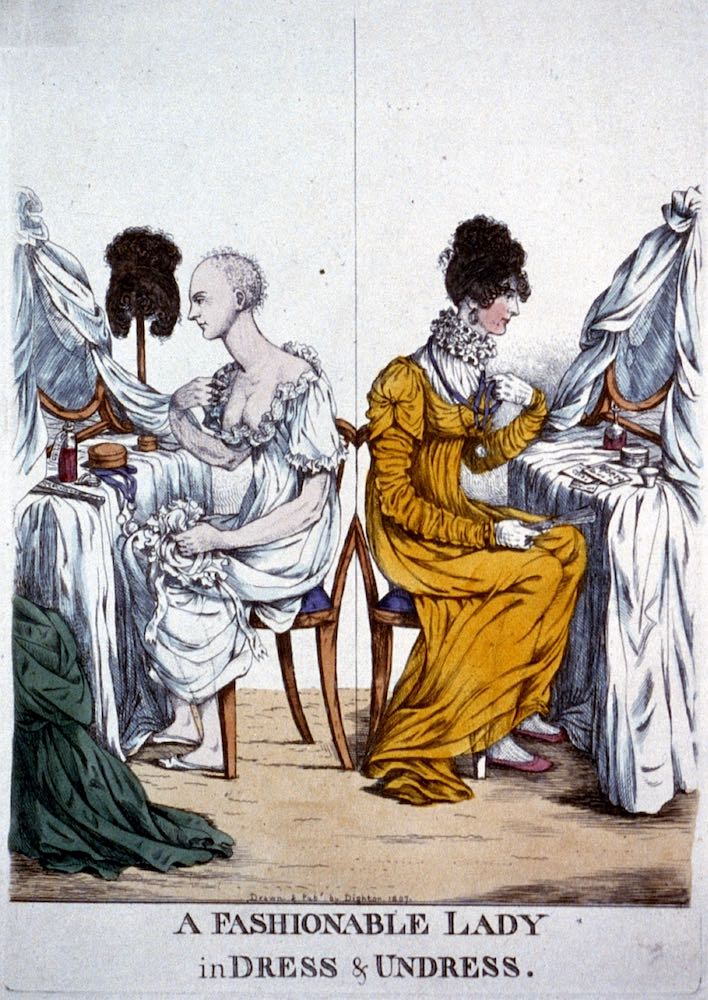
A Fashionable Lady in Dress & Undress. Colour etching by Robert Dighton (1762-1814), 1807
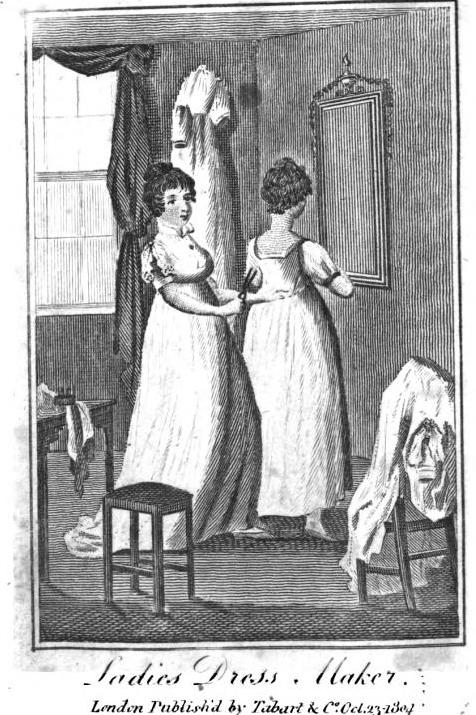
The Book of Trades, Or Library of the Useful Arts, ‘The Ladies Dressmaker’, Charles Squire (printer.), 1807
There is a range of volume to the gathers of the puffs in extant examples, and a range of ways to create the sleeves:
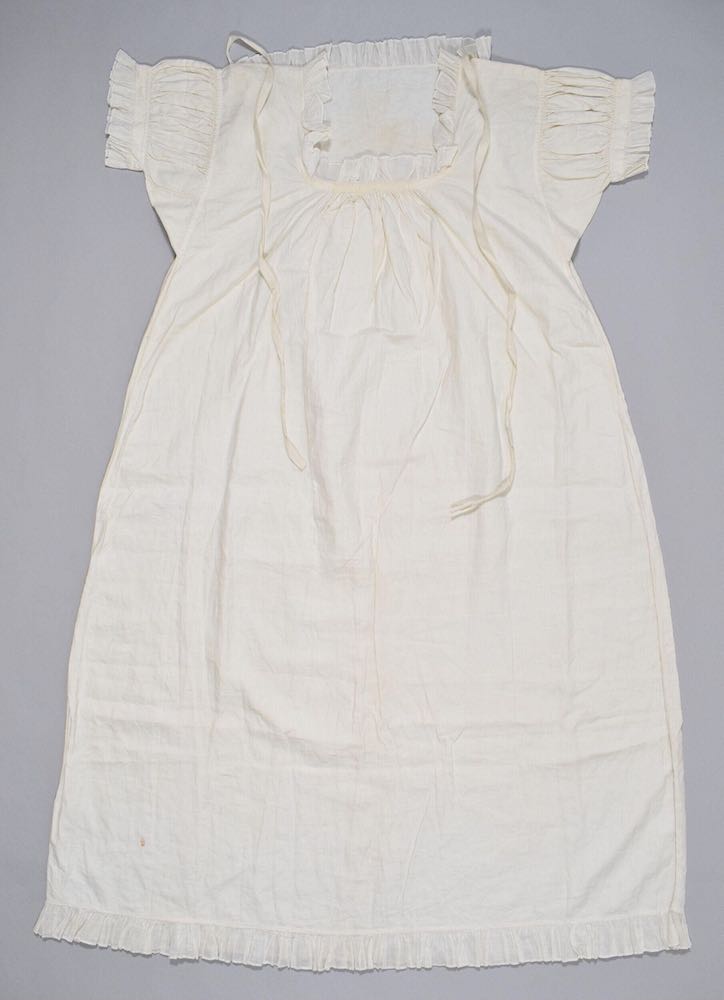
Chemise, linen with a muslin flounce, 1800-1824, English T.4.1924 Victoria and Albert Museum
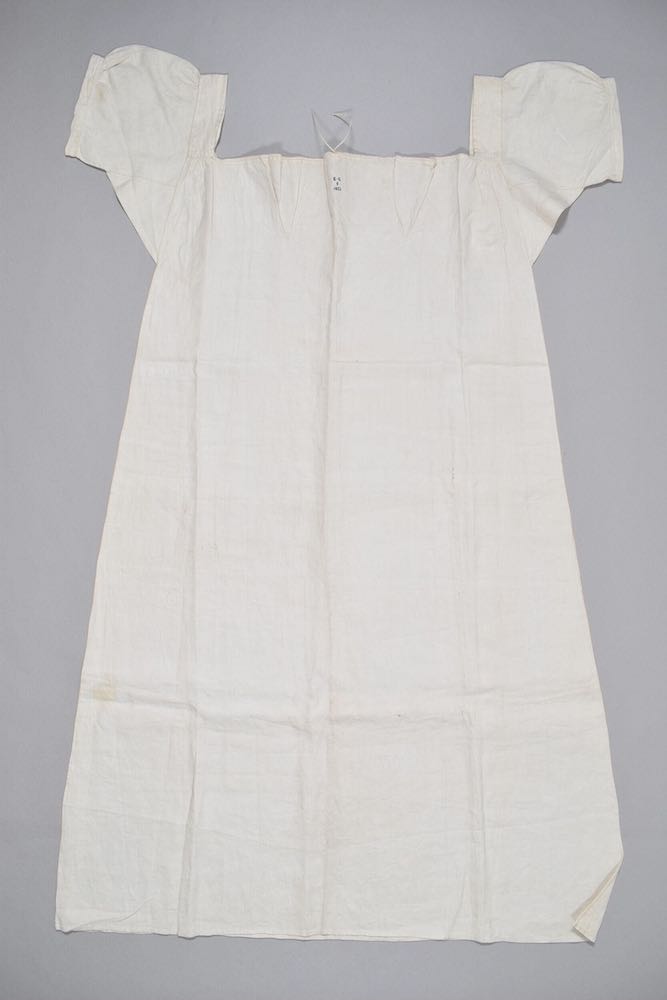
Linen chemise, England, 1822 Victoria and Albert Museum, T.129.1967
The Metropolitan Museum of Art has this interesting extant example with the puffs of the sleeve created by drawstrings:
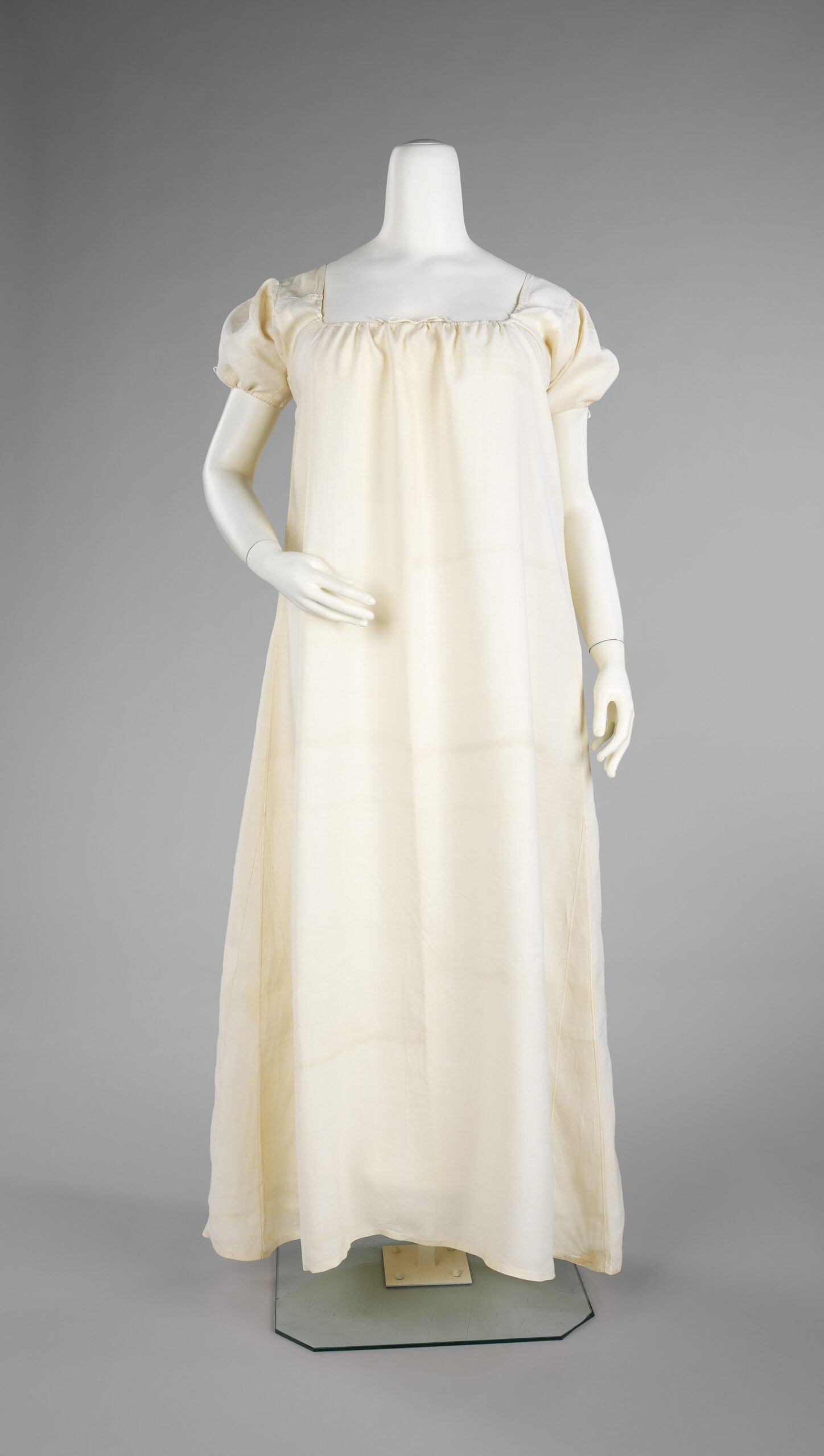
Chemise, 1790–1810, American, linen, Metropolitan Museum of Art, 65.273.1
While I have been conservative in my dating for View C, the extant chemises suggest that View C would be acceptable well into the 1820s.